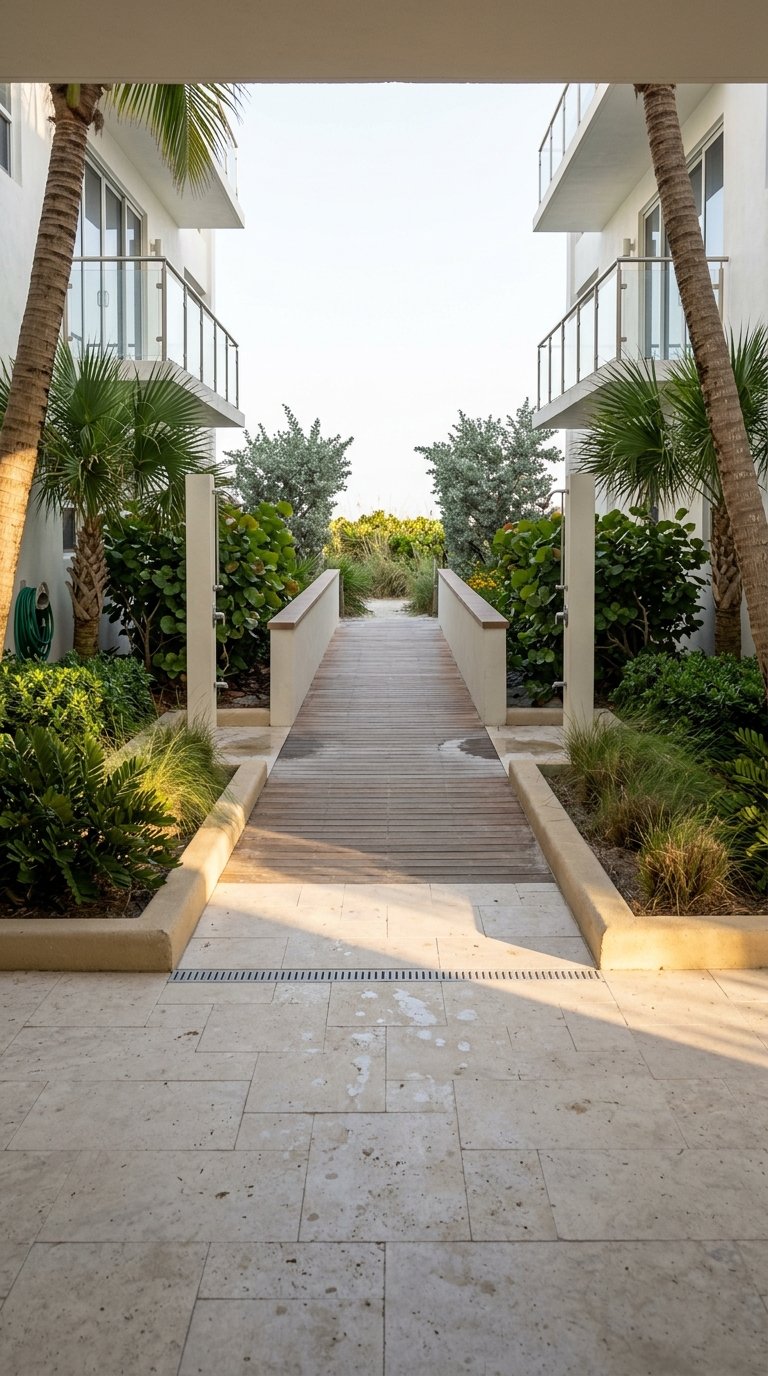
If you want a winter home by the ocean without taking on constant upkeep, Juno Beach should be on your radar. Seasonal buyers are often looking for the same thing: easy beach access, a true lock-and-leave setup, and fewer surprises after closing. This guide will walk you through what makes Juno Beach appealing, what condo ownership in Florida really involves, and which details deserve a closer look before you buy. Let’s dive in.
Why Juno Beach fits seasonal living
Juno Beach offers more than an ocean view. Its oceanfront lifestyle is centered around real public amenities that support day-to-day use, especially near Juno Beach Park and the Palm Beach County Pedestrian Pier.
For seasonal owners, that matters. You are not just buying a unit with coastal scenery. You are buying into a location with guarded beach frontage, parking, restrooms, outdoor showers, picnic shelters, a play area, a designated surfing area, saltwater fishing from the pier, and a 990-foot pier that adds another layer to the waterfront experience.
That combination can make condo living feel practical as well as enjoyable. Instead of managing a yard or exterior maintenance from out of state, you can focus on convenience, beach access, and a home base that is easier to lock up when the season ends.
What oceanfront condo ownership means
Buying an oceanfront condo in Juno Beach is not only about the unit itself. In Florida, the declaration, bylaws, and current association rules function as the operating manual for the building.
That point is especially important for seasonal buyers. Under Florida condominium law, owners, tenants, and invitees are bound by the condo documents and applicable rules, which means written policies matter more than casual comments about what is or is not allowed.
If you are comparing buildings, treat the documents as required reading. Rental limits, guest policies, pet rules, parking rights, storage access, and amenity use should all be confirmed in writing before you move forward.
Why the documents matter so much
A seasonal buyer may spend only part of the year in residence, which makes clarity even more important. If you plan to host family, allow guests to stay while you are away, or possibly lease the unit in the future, the condo documents can directly affect how flexible that ownership feels.
Florida law also gives associations enforcement power. Associations may levy reasonable fines up to $100 per violation, or $1,000 in the aggregate, and may suspend use of common elements and common facilities for certain violations or delinquency, subject to statutory procedures.
In practical terms, that means rules are not just suggestions. Before you buy, you want a clear picture of how the building is run and how strictly the rules are enforced.
What to request before you buy
For a seasonal purchase, your due diligence should go beyond the listing sheet and monthly fee. A well-run building should be able to provide a strong paper trail that helps you understand both daily operations and larger building obligations.
Ask for a complete package that includes:
- Current declaration, bylaws, and rules
- The last 12 months of board meeting minutes
- The current budget
- Reserve schedule or reserve-study summary
- Latest milestone-inspection summary
- Current insurance certificates and deductibles
- Management agreement
- Any notices of special assessments, loans, or lines of credit
Florida law requires associations to maintain extensive official records, including many of these items. Unit owners may inspect and copy records, and written requests generally must be answered within 10 working days.
That is useful for any buyer, but especially for someone purchasing from a distance. Good records can help you separate a well-managed oceanfront building from one with unresolved issues.
Budget, reserves, and inspection rules
This is where a casual beach purchase becomes a serious financial decision. In Florida, annual condo budgets must include reserve accounts for capital expenditures and deferred maintenance.
For budgets adopted on or after December 31, 2024, unit-owner-controlled associations that are required to obtain a structural integrity reserve study may not vote to provide less than the legally required reserves for covered items. For oceanfront buyers, that can affect both monthly carrying costs and future assessment risk.
Structural integrity reserve studies
For residential condominium buildings that are three habitable stories or higher, a structural integrity reserve study must be completed at least every 10 years. The study must address major components such as the roof, structure, fireproofing and fire protection systems, plumbing, electrical systems, waterproofing and exterior painting, windows and exterior doors, plus other high-cost items that affect those systems.
Associations existing on or before July 1, 2022, that are controlled by unit owners were required to complete the first study by December 31, 2025, although some buildings may complete it with a required milestone inspection no later than December 31, 2026.
Milestone inspections
Milestone inspections are another key issue for older condo buildings. For condominium buildings that are three habitable stories or more, a milestone inspection is required by the end of the year the building reaches 30 years of age and every 10 years after that.
For you as a buyer, the takeaway is simple. Inspection status and reserve status are not side notes. They can influence fees, special assessment exposure, and your comfort level with the building long term.
Maintenance responsibilities in oceanfront buildings
Oceanfront ownership comes with wear from salt air, wind, and moisture, so it is important to understand who is responsible for what. Florida law says the association is responsible for common elements unless the declaration assigns certain limited common elements to the unit owner.
That means you should not assume responsibility for items like balconies, windows, doors, shutters, or other exterior-related features. The answer depends on the declaration and how the building has allocated maintenance duties.
Hurricane protection is another important point. Florida law addresses when boards can require replacement and also limits a board’s ability to refuse a properly specified installation or replacement by a unit owner in certain circumstances.
Before you buy, ask directly whether balconies, windows, doors, and hurricane protection are owner responsibilities, association responsibilities, or shared responsibilities. In an oceanfront building, those details matter.
Insurance questions seasonal buyers should ask
Insurance is one of the most misunderstood parts of condo ownership in Florida. The association’s policy and your individual unit-owner policy do different jobs, and you need to understand both.
Florida law requires associations to use best efforts to obtain and maintain adequate property insurance, and associations may also obtain flood insurance for common elements, association property, and units. But the association policy does not cover everything inside your unit.
The statutory framework makes clear that personal property within the unit and many interior items remain the unit owner’s responsibility. That is why a seasonal buyer should review the building’s master policy deductible and also get an HO-6 quote early in the process.
Florida law also requires condo unit-owner policies issued or renewed on or after July 1, 2010, to include at least $2,000 in property loss assessment coverage, with a deductible of no more than $250 per direct property loss when the assessment is for a covered loss.
Do not overlook flood exposure
Flood coverage deserves its own review. FEMA states that most homeowners policies do not cover flood damage, and flood insurance is generally a separate policy through the National Flood Insurance Program.
For an oceanfront condo in Juno Beach, that means you should verify the building’s actual flood designation rather than assume the association’s policy handles every flood-related risk. Condo flood coverage often focuses on the unit interior rather than shared exterior spaces, so the details matter.
Homestead and second-home expectations
If you are buying a seasonal condo, do not assume it will qualify for Florida’s homestead exemption. The Florida Department of Revenue states that the homestead exemption is for property that is the owner’s permanent residence, or the permanent residence of the owner’s dependent, and applications are filed with the county property appraiser.
In most seasonal or second-home situations, that should be reviewed carefully rather than assumed. This is a small detail at first glance, but it can affect your ownership planning.
Smart questions to ask each building
When you are comparing oceanfront condos in Juno Beach, it helps to use the same checklist every time. That keeps the process organized and makes it easier to compare buildings on more than just view and finish level.
Ask these questions before you commit:
- What are the minimum lease terms, if any?
- Are short-term rentals prohibited or capped?
- Are there application or board-approval requirements for leases, guests, or occupants?
- Are there guest occupancy limits during seasonal stays or owner absences?
- Are pets, parking, storage, bike space, or amenity access limited by unit or season?
- Can beach, pool, gym, or clubhouse privileges be suspended for nonpayment or rule violations?
- Are there planned repairs or capital projects involving the roof, exterior, waterproofing, elevators, or concrete restoration?
- Is the building subject to a recent milestone inspection or a current structural integrity reserve study update?
For seasonal buyers, these are not minor details. They shape how easy the condo is to use, what it may cost to own, and how predictable your experience will be from one season to the next.
The real takeaway for seasonal buyers
Juno Beach offers the kind of oceanfront lifestyle many seasonal buyers want: direct beach access, a public pier, and amenities that support easy, low-maintenance coastal living. But the best purchase decision usually comes down to the building, not just the view.
When you review the condo documents carefully, understand the reserve and inspection picture, and ask the right insurance and management questions, you put yourself in a much stronger position. That kind of preparation can help you enjoy the convenience of oceanfront condo living with fewer surprises later.
If you are considering a seasonal condo in Juno Beach and want organized, local guidance through the process, Kristin Wallace can help you evaluate the lifestyle fit, building details, and next steps with confidence.
FAQs
What makes Juno Beach appealing for seasonal condo buyers?
- Juno Beach offers direct access to public beach amenities, including guarded beachfront, parking, restrooms, outdoor showers, picnic shelters, a play area, and the Palm Beach County Pedestrian Pier, which supports a convenient lock-and-leave lifestyle.
What condo documents should a seasonal buyer review in Juno Beach?
- You should review the current declaration, bylaws, rules, recent board minutes, current budget, reserve information, milestone-inspection summary, insurance certificates, management agreement, and any notices of special assessments, loans, or lines of credit.
What Florida condo rules matter most for second-home buyers?
- The most important rules usually involve rentals, guests, pets, parking, storage, amenity access, maintenance responsibilities, and enforcement policies, because owners, tenants, and invitees are all bound by the condo documents and applicable rules.
What are milestone inspections for Florida condo buildings?
- For condominium buildings that are three habitable stories or more, Florida requires milestone inspections by the end of the year the building turns 30 years old and every 10 years after that.
What is a structural integrity reserve study in a Florida condo?
- For residential condominium buildings that are three habitable stories or higher, the study is required at least every 10 years and reviews major components such as the roof, structure, fire protection systems, plumbing, electrical systems, waterproofing, exterior painting, windows, and exterior doors.
What insurance should a Juno Beach condo buyer ask about?
- You should ask about the association’s master policy, deductibles, any flood coverage carried by the association, and the expected cost and scope of your own HO-6 unit-owner policy, since personal property and many interior items remain the owner’s responsibility.
Can a seasonal condo in Florida qualify for homestead exemption?
- Florida’s homestead exemption is for a property that is the owner’s permanent residence, or the permanent residence of the owner’s dependent, so a seasonal or second home should not be assumed to qualify.
Related Reading
The Best Beachfront & Oceanfront Neighborhoods in Jupiter, Juno Beach & North Palm Beach
Luxury Condos from Tequesta to North Palm Beach
Sea Turtle Season in Juno Beach: A Resident's Guide to the Summer Rhythm
Oceanfront vs. Intracoastal vs. Riverfront vs. Canal Homes in Jupiter
Ready to Buy or Sell in Juno Beach?
Whether you are buying or selling a home in Jupiter, Tequesta, or the Northern Palm Beaches, I would be happy to help you understand your options and create a strategy that fits your goals.
Call or text Kristin Wallace at 781-771-5400 or email Kristin to get started.
