The rule changes before the wildlife shows up. On November 15, the boating speed zone covering the Loxahatchee's Central Embayment and its North, Northwest, and Southwest forks stops being a rule about the water near shore and becomes a rule about all of it. From that date through March 31, slow speed and minimum wake apply across the entire mapped area, channel or no channel. For the rest of the year, that same slow-speed requirement only reaches 300 feet from shore. The Jupiter Inlet District maintains the map and the channel markers that make the boundary visible on the water, and the district's own signage flips to match the season, a panel on each post that turns to show the correct message.
Most people who paddle or fish this stretch of river know manatees show up in the cooler months. Fewer notice that the actual mechanism is a boundary that redraws itself twice a year, and that the redrawing matters to everyone on the water, not just the people hoping for a sighting.
Why The Whole Embayment, Not Just The Edges
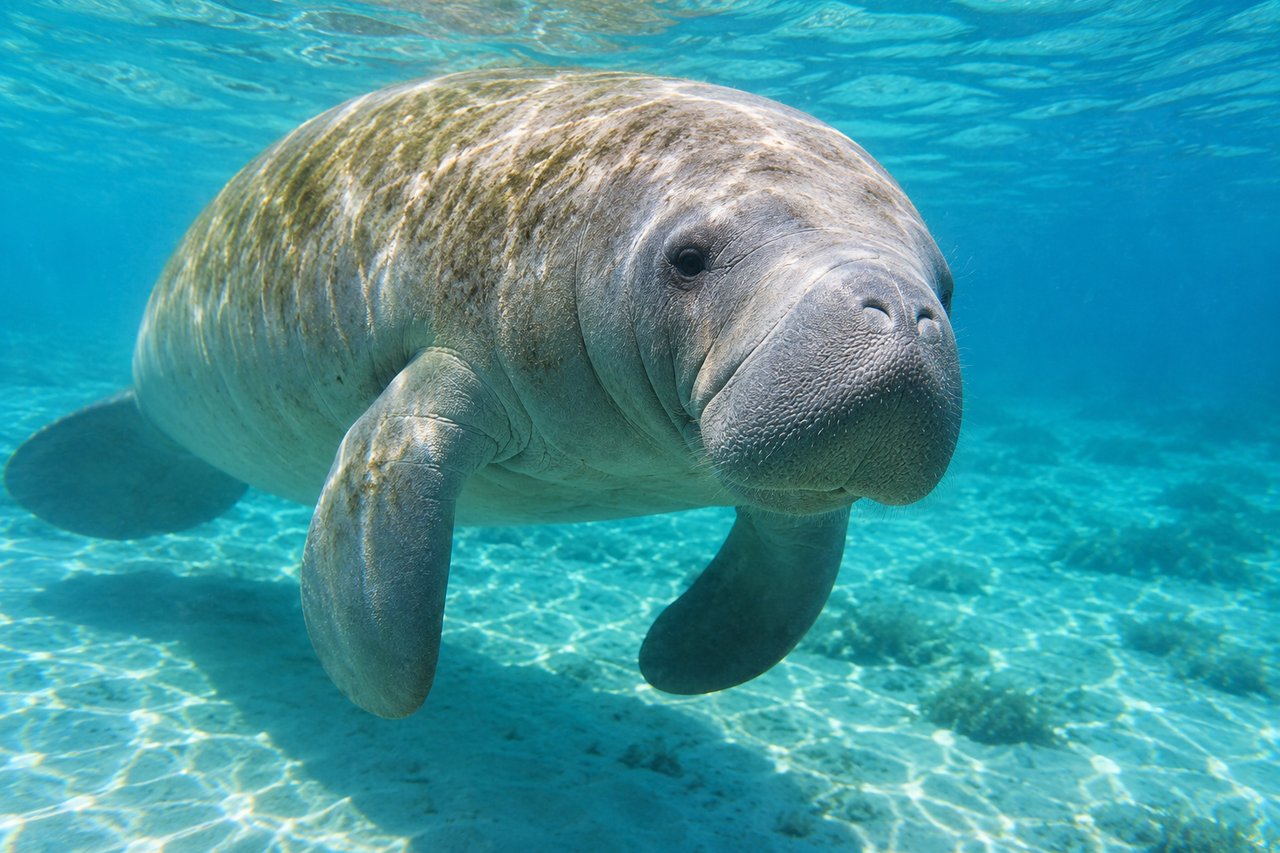
A 300-foot buffer works when the animals you're protecting stay close to shore. Manatees don't. Once the water cools, they move into the sheltered, slower-moving parts of river systems like the Loxahatchee looking for water that holds its warmth better than the open Intracoastal or the ocean beyond the inlet. That means they show up across the width of the Central Embayment and up into the forks, not hugging the banks. A narrow shoreline buffer would leave open water in the middle of the embayment running at full speed while manatees are using exactly that space. The seasonal rule solves for where the animals actually are, not where a simpler rule would be easier to enforce.
The practical result for anyone on the water this fall: the whole embayment gets quieter and slower for about four and a half months, not just the fringes. If you've paddled the Central Embayment in July and again in December, the difference in boat wake alone is noticeable before you ever spot a manatee.
Where To Actually Go Look
The Loxahatchee is one of only two federally designated National Wild and Scenic Rivers in the state of Florida, the other being the Wekiva near Orlando. That designation covers the upper, freshwater stretch of the river, but the manatees this time of year are mostly working the lower, brackish water closer to the inlet and the embayment, which is a different piece of the same system.
Two spots do most of the work for local sightings:
- Coral Cove Park, at the northern edge of Jupiter Island, sits right where clear water and a reasonable launch combine with manatee traffic. Paddlers who know the spot describe consistently good visibility and manatee encounters here, with the Jupiter Lighthouse standing in the background across the water. Weekday mornings beat weekend afternoons, since boat wake picks up once the day gets going.
- Riverbend Park, upstream in Jupiter, is the launch point for the Wild and Scenic stretch itself. Manatees are common here in the cooler months, moving into the calmer upper river alongside the alligators that live in the fresher water further up. That combination is normal for this system and not a reason to avoid the park, but it is a reason to keep dogs out of the water once you're past the lower embayment.
Neither of these is a hidden spot exactly, but neither gets treated as a destination either. They're functional parts of a river system that happens to be one of the better manatee-watching stretches in this part of the state for a few months a year.
Spotting One Without Getting In Its Way
Manatees are legally protected, and it's against the law to touch, feed, or otherwise disturb one, no matter how close it drifts to your kayak. The Jupiter Inlet District's own boater guidance lines up with standard practice elsewhere in the state: polarized sunglasses cut the glare enough to actually see below the surface, and the animal itself is often easier to spot by its wake than by its body, a snout breaking the surface or a flat swirl where a tail just moved. If you're within 50 feet of one, the rule is simple. Stop making way. Let the animal decide where it's going, not your paddle or your prop.
None of this requires special gear beyond what most paddlers already have on the water. It requires paying attention to a slightly different set of signals than you'd use to spot a fish or a bird, and slowing down enough that those signals have time to register.
What The Season Actually Changes
The line on the map matters more than the sighting because it changes the texture of an ordinary morning on the water for the better part of five months, whether or not a manatee ever surfaces near you. Boat traffic through the embayment moves slower and quieter. The window for a calm early paddle stretches later into the morning, since the whole area is already running at reduced wake instead of speeding up the moment you clear the shoreline buffer. If you've been meaning to get out on the Loxahatchee before the cold fronts start rolling through, the few weeks before November 15 are your last chance to see the embayment at its normal pace. After that, slower is simply how the mapped area behaves until spring.
If you're out on the Loxahatchee this season and the light does something worth mentioning, or a manatee surfaces closer than you expected, we'd like to hear about it. Kristin Wallace pays attention to this stretch of river for the same reason she pays attention to everything else in this village, because it's the kind of detail that only shows up if you're actually here. Let's Connect.
Frequently Asked Questions About Manatee Season and Boating in Jupiter
When is manatee season in Jupiter, Florida?
Manatee season in Florida generally runs from November 15 through March 31, when manatees are more likely to gather in warmer waters. Boaters should pay close attention to posted seasonal speed zones and manatee protection areas during this time.
Can you still boat in Jupiter during manatee season?
Yes. Boating continues throughout the winter, but certain waterways may have seasonal speed restrictions designed to protect manatees. Always follow the posted signs for the specific waterway you are traveling.
Are there manatees in the Loxahatchee River?
Yes. Manatees can be seen in the Loxahatchee River and other Jupiter-area waterways, particularly during the cooler months. Boaters should stay alert, especially in shallow water and areas where manatees may be feeding or traveling.
Do manatee zones affect waterfront homeowners in Jupiter?
They can. If you are considering a waterfront home, it is helpful to understand not only the dock and water depth but also the route from the property to the Jupiter Inlet, including bridges, no-wake areas and seasonal boating restrictions.
What should I consider when buying a Jupiter waterfront home for my boat?
Important considerations include water depth, tides, dock dimensions, boat lifts, seawall condition, fixed bridges, bridge clearance, idle and slow-speed zones, and travel time to the Jupiter Inlet. The right waterfront location can be very different depending on the size and type of boat you own.
Related Reading
The Ultimate Guide to Boating in Jupiter, Florida
Top Questions Every Waterfront Buyer Should Ask Before Purchasing a Home in Jupiter, Florida
Bridge Heights in Jupiter: What Every Boater Needs to Know
Jupiter Waterfront & Boating Guide
Boating in Jupiter During Manatee Season
Manatee season is a good reminder that boating in Jupiter changes throughout the year. Seasonal speed zones, tides, bridge clearances, water depth, and inlet access can all affect how and where you boat.
For anyone considering a waterfront home in Jupiter or Tequesta, understanding the waterways is just as important as understanding the house itself. The right property depends on your boat, where you want to go, how quickly you want to reach the Jupiter Inlet, and whether there are bridges or other boating restrictions along the way.
For more information, visit my Jupiter Waterfront & Boating Guide for information about local waterways, waterfront communities, bridge considerations, docks, and other important details for Jupiter-area boaters.
Ready to Buy or Sell in Jupiter and The Palm Beaches?
Whether you are buying or selling a home in Jupiter, Tequesta, or the Northern Palm Beaches, I would be happy to help you understand your options and create a strategy that fits your goals.
Call or text Kristin Wallace at 781-771-5400 or email Kristin to get started.
This article is general information, not legal, tax or financial advice. Consult a qualified professional about your situation.
